

DEAS-GHNÀITHEAN - RITUALS
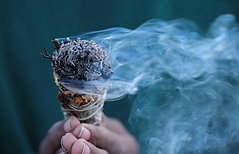


WHAT IS A RITUAL?
Ritual is defined in the dictionary as "established formal behaviour: an established and prescribed pattern of observance" or "performance of formal acts: the observance of actions or procedures in a set, ordered, and ceremonial way""[1] Most human beings are very good at creating patterns, which are rituals though we mask this by calling them by different names or by no name at all. We do things in a set order. It helps us to organise our days and get the things done that we need to do. Some have incredibly fixed routines; others are more flexible but all of us feel dislocated when something happens to upset our routines because they give our lives a sense of order, especially in what appears to be a chaotic universe.
%20.png)
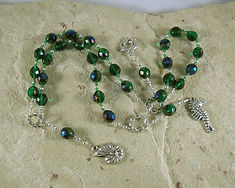
Like all rituals, religious rites are best done on a regular basis. The more we perform them the more we get out of them. If I do my ‘practice’ regularly, I feel a sense of calm and I am more aware, and more appreciative of the world around me. It helps me to understand the greater patterns like the pattern of the seasons and of the years, which can sometimes go by unheeded. In one sense it is my attempt to understand the pattern that the Brianna, the gods has set in the universe and thereby to understand the Brianna.
A ritual consists of words and actions appropriate to the circumstances and different rituals have different forms. The idea of doing a ritual may be daunting, or even embarrassing to start with. As you get used to them they will become second-nature and you will feel comfortable, if you are doing them right.
[1] Encarta ® World English Dictionary © & (P) 1998-2005 Microsoft Corporation
THE PURPOSE OF RITUAL
Some pagans think that all rituals should have the same form but as the purposes of different rituals are different, the forms are as well. A ritual performed for healing a person or animal is different to one intended to bless, sain, curse or one for divination or discerning the answer to a question. Some rituals may need a single word, phrase or action while others may be more complicated. You can make ritual as simple or as complicated as you like. For example, if one says a prayer on waking that is a ritual but it may be just a simple phrase. There is a method of healing called Silent Water where water is brought from a sacred well to the patient without a single syllable being uttered. The ritual for the night of Samhuinn is quite complicated and consists of a number of prayers and actions.
Collins dictionary defines prayer as “the act of speaking to a deity or the words used to speak to a deity”[2] Prayer simply means an individual act of worship or honouring. I have used both the term ‘worship’ and ‘honouring’ as some pagans are offended by the idea of worshipping the Brianna, the gods or anything else. Honouring and worshipping are the same thing.
[2] Collins Online English Dictionary, 2023



The Otherworld is the source of all the things we have had, do have and will have. This includes growth, wealth, fertility, wisdom, prosperity and luck. The myths and folklore are clear that we get these through the mediation of the Brianna and the sìtheachan, the Blessed Dead
If we are being true to the laws of hospitality, we are obliged to reciprocate. We can do that by offering not only material things to the Brianna but also our time, energy and our actions in performing rituals. Worshipping or honouring the Brianna and the Sitheachan are the means of thanking them for the gifts we receive, in the hope they will grant us more.
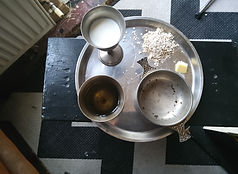

The energy, Brìgh, life-force, to grow, mature and reproduce comes from an Saoghal-eile, the Otherworld. Each day the Otherworld sends Brìgh into our world. Again the principle of reciprocity suggests we should honour that gift and give back in return.
Another reason to honour the Brianna, the gods is that unlike both the Abrahamic and Classical traditions Celtic paganism has no creation myth which sees humans come into being by the actions of the Brianna. Instead, the Brianna are our ancestors. We are descended from them literally. So not only should we act according to the laws of hospitality, but also from an attitude of familial respect.
“In the Hebraic theology, dominated by the one-god idea, man is necessarily a thing distinct from god, made by god, out of a substance different to God. In the Celtic theology, with its spiritual unity behind phenomena, man is the offspring , not the creation, of deity…..From the country of the dead came the great immigrations; and so inextricably interwoven in the scheme of archaic Irish theology became the idea of the divine origin of the race, that the most profound scholarship is as yet undetermined as to where, in the early literature of Ireland, mythology ends and history begins”[1]
It is a profound and important distinction. Whereas in Abrahamic, Classical and even Norse theology, the god/s are of a different nature, character and substance to humanity. In Celtic theology we are identical to the Gods, just far less powerful. The Fomoire, Partholonians, Nemedians, Tuatha and the Sons of Mil – ourselves, all come from the Otherworld.
Another purpose of ritual is to increase Brìgh, life-force by acting in accordance with a' Bhrèith Nèamhaidh, The Divine Order or Law. When we perform rituals we are acting in accordance with Divine Law, which should therefore increase our Brìgh in the same way that exercise increases the size and power of muscles. Reciprocating the generosity of the Brianna is a ‘good action’. Good consequences flow from good actions.
[1] The wisdom of the West, Cousins, J.H., The Theosophical Publishing company, 1912, London
