

an LATHA AGUS a' MHÍOS
THE DAY & THE MONTH


OIDHCHE IS LATHA - NIGHT & DAY

Time itself comes from the Otherworld. The Imram Brain describes a group of birds that ‘call the hours’ from ‘an ancient tree’.
“An ancient tree there is with blossoms,
On which birds call to the Hours.
'Tis in harmony it is their wont
To call together every Hour.”[1]


This is confirmed in Laergh’s description of Fairyland from the Sick-bed of Cuchulain.
“there stand at the Eastern door,
Three ancient trees of purple pure,
From them the sweet everlasting birds
Call to the lads of the kingly rath.”
“At the door of the liss there is a tree,
Out of which there sounds sweet harmony,
A tree of silver with the shining of the sun upon it,
Its lustrous splendour as of gold.”[2]
The tree of silver may refer to the Silver Birch, a tree associated with Manannan and both Imbolc and the La Na Caillich (Spring Equinox). The birch with the larch are two of the first trees to produce leaves in spring. It is a birch rod that Brighid uses to counteract the frost and ice of the Cailleach’s quicken (rowan) rod and to instil the soul into a new born babe,[3].
The Otherworld is also the determiner of time in the sense of night and day. In the Suidigud Tellaich Temhra (Settling of the Manor of Tara) a meeting of elders, including Fintan Mac Bochra, and nobles in Tara are called to determine the true division of Ireland, at Samhainn. It is interrupted by the arrival of Trefulaing Tre-eochair (Through Enduring of Three Sprouts).
“‘Once we were holding a great assembly of the men of Ireland
around Conaing Bec-eclach, King of Ireland. On a day then
in that assembly we beheld a great hero, fair and mighty,
Approaching us from the west at sunset. We wondered greatly at the magnitude of his form. As high as a wood was the top of his shoulders, the sky and the sun visible between his legs, by reason of his size and his comeliness.
A shining crystal veil about him like unto raiment of precious linen. Sandals upon his feet, and it is
not known of what material they were. Golden-yellow hair upon him falling in curls to the level of his thighs.
Stone tablets in his left hand, a branch with three fruits in his right hand, and these are the three fruits which were on it, nuts and apples and acorns in May-time: and unripe was each fruit.”[4]


One of the important details is that, the arrival comes from the west at sunset, the place of Manannan’s land. Indeed, the description is reminiscent of Manannan himself and the crystal veil sounds very much like the Feth Fiada, the magic mist which prevents mortals from seeing the Brianna (gods), which is one of his gifts, the branch is reminiscent of the silver branch proffered to Bran.
He is asked his purpose and replies:
“I have come indeed,’ said he, ‘from the setting of the
sun, and I am going unto the rising, and my name is Trefuilngid Tre-eochair.’ ‘Why has that name been given unto thee?’ said they. ‘Easy to say,’ said he. ‘Because it is I who cause the rising of the sun and its setting.’”
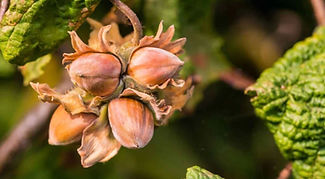

His name actually translates as ‘Through enduring, of three sprouts”. Presumeably, the three sprouts refer to the nuts, apples and acorns on the branch he is carrying. Acorns ripen in September. Nuts ripen between September and November and apples can ripen anytime from October onwards but are associated with Samhuinn in early November. The assembly takes place at Samhainn but the fruits are said to be from May and are unripe. Again, there is the manipulation of time in relation to the Otherworld. The manipulation here being doubled. The implication of the statement is that it the cultivation of the three fruits is connected to the rising and setting of the sun. it may perhaps be an indication of immortality, or that the three fruits are all connected to the concept of wisdom and knowledge, and it is that, that causes the celestial events. Or it could be that the statement is made to indicate that there is a dependency between the celestial events and the growth of the fruits or it could be all of these.

Fintan is later given the branch and uses it to establish the Five Great Trees, Eo Mugna (Oak), Bile Tortan (Ash), Eo Ruis (yew), Craebh Da Thi (Ash) and Craebh Uisnig (Ash). The apple may also be a reference to one of the names of the Otherworld – Emain Ablach, The Place of Apples. A symbolic action which suggests that trees, or at least the Great Trees, with all of their symbolic qualities come from the Otherworld.
The text states that Trefuilngid lives in the west, the traditional direction of the Otherworld or Emain Ablach. it is the place where the sun rises and to where it goes when it sets. Day, and night are determined by the actions of the Sith.
“Hail to thee thy sun of the seasons,
Who traversest the skies aloft,
Thy steps are strong on the wing of the heavens,
Thou art the glorious mother of the stars.
Thy liest down in the destructive ocean,
Without impairment, without fear,
Thou risest up on the peaceful wave-crest,
Like a queenly maiden in bloom”[5]
Dawn and Dusk are the liminal, most powerful and dangerous times of the day. The druid ‘consults his god whom he adores’ at Dawn in the Golden Apples of Lough Erne.[6] Brighid ‘brings the dawn’. In one sense we can see this as touching the day with her Slatan Brighid to bring the day to life just as she does with animals and humans. Aine rides two horses, which may represent dawn and dusk, the two equinoxes and the two solstices. Macha gives birth to two children while racing horses, a solar symbol, causing the Debility of the Men of Ulster. Ailen the Bruner and Ailen Triceann both emerge at sunset from the Cave of Cruachan as does the three cat-sith who attack the three heroes in Fled Briccenn.
[1] Voyage of Bran, Meyer, K., D. Nutt, 1895
[2] Laergh’s Description of Fairy-land, Poem-book of the Gael, Hull,E., Ballantyne, Hanson & Co., 1912
[3] Sloinntireachd Bhride, Carmina Gadelica, Vol I, Carmichael, A., Floris Books, 2006
[4] Settling of the Manor of Tara, Best, R.I., Eriu 4, Dublin School of Irish Learning, 1908-10
[5] A’ Ghrian [317], Carmina Gadelica, Carmichael, A., Floris Books, 2006
[6] Golden Apples of Lough Erne, McCoy A., O’Kearney, N., Fairy and Folk-tales of the Irish Peasantry, Yeats, W.B., Walter Scott, 1888
a' GHEALACH - THE MOON
All the authorities, the mediaeval monks, classical authors and folklore, agree that the Celts measured time and the month by the moon. The Carmina Gadelica records just three prayers to the sun but over twenty to the moon, and especially the New Moon. The New Moon, Full Moon and Dark of the Moon are mentioned the most although there are references to the waxing and waning moons.[1]

One point is that sometimes astronomical terms aren’t quite the same as used by the religious. In astronomy the New Moon refers to the day before light first emerges after the dark of the moon. For most religions the New Moon means the day that the first glimmer of light emerges from the dark, which is normally a day after astronomical new moon. This can be termed as Religious New Moon or First Light of the New Moon.

Unlike the sun, the moon changes its shape and appearance during the course of a lunar month. From astronomical New Moon when it is completely dark, more of its surface is illuminated each day until Full Moon when it begins to darken again. As a result, these changes have come to have spiritual meanings for us. The cyclical change from New to Full and back again reflects the course of life and the constant change and renewal of the universe.
“the appearance of the New Moon after three nights of relative darkness, its growth and transformation as it approaches the radiance of the Full Moon, its eventual waning and disappearance, and subsequent ‘rebirth’ presented ancient peoples with an obvious and powerful metaphor of their own experience of birth, death and renewal. An additional concept of ‘becoming’ arose from watching the changing forms of the moon,”[2]

The moon is associated with the female, due to menstruation;, the sea, because of the effects on the tides; wisdom as it seems to reveal and hide, especially esoteric or mantic wisdom; healing and health, as it grows and wanes; wealth for the same reason; cattle because the crescents are reminiscent of horns and were the principle means of wealth in the bronze, Iron and roman ages; in the Duile it’s connected to the mind, the east-north-east and north-east, teimen, plain or obscure and alad, pie-bald colours, ice, purity, content of speech, knowledge and second-sight.
The moon goes through eight phases. New Moon; Waxing Crescent; First Quarter; Waxing gibbous; Full; Waning Gibbous; Last Quarter and finally the Waning Crescent. Usually, the main four quarters are called New, Waxing, Full and Waning.
Due to its elliptical orbit the number of days between each of the main four phases varies between 6.5 and 8.2 days and are not fixed. It takes 14.81 days for the moon to go from New to Full. Taking the average days between each phase would give you a rough idea of where in the month you were.

Although the orbits of the sun and the moon are not physically linked, because of their regularity, there are resonances between them and other bodies in the solar system.
-
A solar eclipse can only occur during a Astronomical New Moon.
-
A lunar eclipse can only occur during a Full Moon.
-
The moon never occupies the same area of the sky as the sun. if they are both in the sky, the sun will be setting in the west as the moon is rising in the east and vice versa.
-
A new moon appears at its highest point in the sky on the summer solstice and lowest on the winter solstice.
-
A first quarter moon appears at its highest point in the sky on the spring equinox and lowest on the autumn equinox.
-
A full moon appears at its highest point in the sky on the winter solstice and lowest on the summer solstice.
-
A last quarter moon appears at its highest point in the sky on the autumn equinox and lowest on the spring equinox.
-
Once every 18.6 years the Moon ‘standstills’ or rises at the same point on the horizon for three consecutive nights.
-
Between January and March each year the waning and waxing crescents can appear on its ‘bottom’ appearing in the sky like a benevolent smile.
-
When Venus appears with the moon in the sky it appears as the Morning Star with the Waning Crescent and as the Evening Star with the Waxing Crescent.
-
The highest tides of the month, Spring Tides, happen at the New and Full Moons.
-
The lowest tides of the month, Neap Tides, happen at the Waxing and Waning Moons.
-
The highest Spring Tides of the year occur at the New or full Moon closest to the equinoxes.
-
The lowest Neap Tides of the year occur at the Waxing or Waning Moon closest to the Solstices.
The ancients probably devised the first calendars in noting these resonances and the movement of the sun and the rising and setting of the constellations.

The Celts believed that the Brígh and the Toradh of a plant or animal, and presumably humans as well, waxed and waned with the phases of the moon. There is a modern agricultural movement which uses the phases of the moon to determine the best time to sow, plant and reap, called Lunar or Biodynamic Gardening.
“People who practice gardening by the moon say that moisture in garden soil is influenced by the moon, just like the moon’s influence on tides. The moon pulls moisture up to the surface of the garden soil where it can be best utilized by crops. The increase in moisture helps seeds germinate, speeds plant growth rates, and produce more abundant harvests. There is also a possibility that the increases and decreases in overnight light during different lunar phases can impact the germination of seeds which prefer light or dark environments to germinate.”[3]
The first half of the month was seen as ‘lucky’ or propitious, while the second half was generally regarded as ‘unlucky’, specially if the lunar month had 29 days instead of 30 so was seen as ‘incomplete’. The Coligny Calendar, a Gaulish Calendar, marks months with 30 days as ‘Mat’ or ‘good’ and those with 29 days ‘Anmat’ meaning bad.[4]

Within months, the first half of the month was considered lucky as it always had 15 while the second period was considered unlucky especially if it was incomplete. Both the Irish and Scots Gaelic for a fortnight actually means '15 days' in Irish it is 'cóicis' and Scots Gaelic 'cola-deug' from 'cóig latha deug'. The first half of a lunar month is always 15 days from New Moon to Full Moon i.e. 'Full'. The second half was either 14 or 15 days.
The Gaelic word for moon is ‘Luan’ but it is never used when referring to the moon, except for ‘Di-Luain’, Monday or Day of the Moon, which is also the source of the word Monday. In that sense we have a ‘moon day’ every week! Luan may have referred to the New Moon and the full Moon. The normal word used for the moon is ‘Gealach’ or ‘brightness’. Either the mention of the taxonomic term was too dangerous or too sacred to be uttered.
The moon is addressed by various kennings which indicated its importance, shape, function and beauty.
-
For guidance: Guiding lamp of the poor, Guidant of the sky, Guiding jewel of gentleness, Queen-maiden of guidance, Jewel of guidance, lovely leader of the way.
-
For sovereignty, leadership and power: Queen of the night, Queen-maiden of guidance, Queen-maiden of good fortune, Queen-maiden my beloved, Fair one of grace, majesty of the stars.
-
For relationships: Mother of the stars, fosterling of the sun.
-
For love and beloved: Beauteous loved one of my heart, queen-maiden my beloved, lovely leader of the way. For beauty: Fair one of grace, lovely leader of the way, Beauty of the heavens, majesty of the stars, Beauteous loved one of my heart.
-
As a Jewel: Jewel of the night, Guiding jewel of gentleness, Glorious jewel of all the ages, Jewel of guidance, Jewel of the heavens.
-
For shape: Silver wheel, flower-garland of the heavens.
There is some evidence that the moon affects both human and animal behaviour. Coral and turtles both time their reproduction to the full moon. Some psychological studies suggest that the moon changes the amount of sleep and therefore alters mood, especially those who have certain forms of personality disorders and mental illnesses. Some studies have shown that the amount of sleep varies up to its maximum around the full moon.[5] Others have shown that the interaction between the lunar cycle and the declination cycle of approximately 13.7 days affects sleep patterns even when there is no exposure to moonlight.[6]
There is no clear and unequivocal myth to explain why the moon has phases. Brighid, Aine, Grian and the Cailleach are all associated with the moon. Elada, the father of Breas, visits Eriu in a silver boat to conceive him. Some argue that this shows him to be the Brian of the moon but the rest of the description concentrates on gold, the colour of the sun and more importantly he wears five torcs, which I suggest is a symbol of fathering a future High-king, one torc for each of the ancient provinces of Ireland.[7]


Some see Eadaoin as the Brianag of the moon, such as Ron Hicks. Her mythos includes a series of transformations from Eadaoin to a pool of water, a worm and then a fly and finally Eadaoin Òg. All of her myths emphasize her healing capabilities, with Midhir, Aillil, and Conaire. She meets Midhir three times at 3am in the morning. That would fit with the healing aspects of the moon and 3am is close to dawn. The imagery however seems in the wrong order. The pool could represent the Full Moon so the worm would be the waning moon, the fly, not butterfly, new moon and Eadaoin Òg as the waxing moon. The pool could be the dark of the moon which would make the worm the new moon and the fly the full moon and Eadaoin Òg would be the waning moon. Her mythos fits far more with the movements of the planet Venus. Her euhemerised saint’s day is 16th July, which is in the Gaelic month of An t-Iuchar, the Dog-days, so named for the helical rise of Sirius the dog-star, which connects her more to the stars than the moon.
Undine’ (1872) by John William Waterhouse. (Public Domain)
Rothniamh, ‘Wheel Splendor’ is a Brianag, goddess who visits Fingen on Samhuinn eve to relate a series of wonderful events due to the birth of Conn Cetchathach.[8] She is described as the daughter of Umal Urscothach, ‘Fresh flowery’ of the same Siíth as Aine. Her name is cognate with Arianrhod, who some see as the Welsh goddess of the moon or stars or night sky. She does not appear in any other myths or folklore, as far as I’m aware. Fingen’s Night-watch presents her as a Brianag of second-sight and prophecy and secret knowledge but many of the ‘wonders’ she describe happen way before the birth of Conn such as the Five Great Trees and the birth of the Boyne.


In the folklore of Ireland and especially of Scotland the Cailleach is very fond of butter. In the story of the Cailleach Mhor of Cilbrick a young man is determined to prove to the locals that he is a match for her. When asked where he had come from he says ‘From the south to the North’. He tricks her into inviting him to sit down and he steals a portion of the ‘round Bannock cake shaped like the moon’.
He comments that the cake looked ‘dry’ to which her reply was that the fat side was to her, showing him the side with an inch of butter on it. He then grabs a portion of the cake and runs away.[9]
In Callanish in the Orkneys is a stone shaped like a reclining figure called the Cailleach na Mointeach, Old Woman of the Moors. Once every 18.6 years the full moon appears to rise from between her legs as if she is giving birth to it.[10]
The buttered Bannock also features in the story of the Cailleach and the Poachers.[11] It is also mentioned in a New Year’s tradition of mumming and first footing in the Carmina Gadelica. There may be a lost aetiological myth, where a Bannock represents the moon. The brighter it gets from New Moon, the more butter is being spread across its surface, becoming fully covered at the Full Moon. Then it disappears as the Cailleach eats it, reappearing at New Moon.
The Cailleach is associated with long life and age. She is also associated with transformations, healing, wisdom and wealth. As Bui she is victory, which is appropriate for the continual return of the New Moon. She is associated with winter when the moon is brighter in the night’s sky. Her cave at Lough Crew is not only aligned with the Winter solstice but with the closest full-Moon. One of the great things about Celtic mythology, is that there is not a single explanation for everything. If the moon can be a ‘big pizza pie that hits your eye’, it can be a palm Bannock covered in butter!
Explanation does not mean control.
Even if you accept any or all of the above myths and interpretations, it does not mean that the Brian mentioned have any form of control over the moon. Like the sun it travels in the Bith-Aotrom. The Brianna have influence over it but not control of it.
[1] Carmina Gadelica, Carmichael, A., Floris Books, 2006 (1900)
[2] Queen of the Night, MacLeod NicMhaca, S., Weiser Books, 2005
[3] Home For The Harvest, Dufford, M.J., 2022
[4] Mapping Time, Part II, “Four European Calendars”, Richards, E.G., OUP, 1998
[5] Association between Lunar Phase and sleep characteristics, Turámyi C.Z. et al, PMID, 2014
[6] Synchrony of Sleep-wake Cycles with Lunar Tidal Cycles in a rapid-cycling bipolar patient, Very, D.H & Wehr, T.A.,
[7] Myths & Legends of theCeltic Race, Rollestan, T.W.,George G. Harap & co, 1911
[8] Fingen;s Night-watch, Cross.t.P & Brown, C.L., The Romantic Review, Vol. IX, 1918
[9] Popular Tales of the West Highlands, Vol. II, Campbell, J.F., Alexander Gardner of Paisley and London, 1890
[10] Callanish: The Stones, The Moon and the sacred landscape, Curtis, M. & G.R., 1994
[11] Visions of the Cailleach, D’Este, s. & Rankine, D., Avalonia Books, 2008

a' GHEALCH ÚR -THE NEW MOON
The New Moon was a major event each month. The Carmina records that the returning moon was greeted as a dear friend returning after an absence. There are over twenty prayers to the moon and just three to the sun. The New Moon was saluted with doffing of caps, bending of knees, bowing, and turning silver coins in the pocket, Certain plants would be sought or sometimes the point was to come across them accidentally and the dew of the first morning was considered especially potent.[1]
It is a time of joy for the returning light and thanksgiving that we have survived through the last month and the time of darkness. The New Moon was a time of rejoicing. Boys and girls would compete to be the first to sight the slim crescent. People greeted the new moon with “joyous welcome and acclaim” as light had returned to the night.
It is a time of conception to embark on new projects or to enter a new phase of existing projects. It was an auspicious time to set out on a journey. Practically, it was an auspicious time to set out to sea as fisherman and sailors could navigate again by the light of the moon. People could venture outdoors again as they could see at night.
The New Moon and Waxing Moon was a time for cutting hair, peats, reaping grain and other plants, shearing, cutting and coppicing wood and indeed anything which involved cutting, possibly because the crescent moon resembled a sickle.
As a liminal time, it was also associated with ‘draoidheachd’ or ‘magic’ divination and prophecy and answering questions or meditating.
If, one thinks of the month in terms of cultivation, it is the time of planting the seed and watering it in. In terms of building a house, one could characterise it as laying the foundations. So, the Religious New Moon was definitely important.
It would also of been the time to mark the Spring Tide, which could be characterised as the return of the sea to the land. The New Moon during winter was especially important because the storms combined with high tides, would have been the best chance of securing sea-ware to fertilise the fields.
One thing to bear in mind is that modern astronomical tables and apps do not differentiate between a moon rise at night or during the day. During the day, the moon cannot be seen except in twilight. So if a Religious New Moon rises during that period, the ancients would have started the month on the following day when it was visible. It is the return of light that matters, not the exact astronomical moment.
[1] Aillgean Fionn Na Feil [303] & Geaslanachd na Gealaich [304], Carmina Gadelica, Vol. III, Carmichael, A., Floris Books,2006 (1900)
LATHA a' H-UILE IULC - DAY OF ALL-HEAL

The sixth day of the moon has special significance. Pliny describes one of the few purely ‘druidic’ ceremonies we know of. It comes from a single account though Miranda Aldhouse-Green has pointed out that all the elements described by Pliny are Celtic in nature.
“We should not omit to mention the great admiration that the Gauls have for it as well. The druids – that is what they call their magicians – hold nothing more sacred than the mistletoe and a tree on which it is growing, provided it is a hard-timbered oak [robur][4][5].... Mistletoe is rare and when found it is gathered with great ceremony, and particularly on the sixth day of the moon.... Hailing the moon in a native word that means 'healing all things,' they prepare a ritual sacrifice and banquet beneath a tree and bring up two white bulls, whose horns are bound for the first time on this occasion. A priest arrayed in white vestments climbs the tree and, with a golden sickle, cuts down the mistletoe, which is caught in a white cloak. Then finally they kill the victims, praying to a god to render his gift propitious to those on whom he has bestowed it. They believe that mistletoe given in drink will impart fertility to any animal that is barren and that it is an antidote to all poisons.”[1]
In the mythopoetic complex of Lough Gur, CnocAine and Cnoc A’ Duin, the sick and injured are taken to Cnoc A’ Duin on the shores of Lough Gur on the sixth day of the month. There Fer Fhi plays the Restful Strain on his harp while Aine strokes the sick person’s hair with her golden comb. If they cannot effect a cure by the nineth day, Aine sings or plays the Ceolsidhe, Sidh or fairy music, which eases the person’s passing into the Otherworld.
“on the sixth night of every moon, the sick were brought out into the moonlight to be healed. The night was known as all-heal. If the patient did not recover by the eighth or nineth night of the moon they would hear the ceolsidhe, the fairy music which aine brings to comfort the dying. The music itself is the Suantraighe, is sleep music played by Fer Fhi on his harp”[2]
Another name for mistletoe in Gaelic is ‘All-heal’. White bulls were probably sacrificed because of the nature of mistletoe berries. Its quite disconcerting when you first squeeze a berry. It really does look and feel like semen and pure milky white.
Approximately between 30 and 33% of the moon’s surface is illuminated on the sixth day, which gives it an appearance of a fat white/silver/grey crescent, An Crom Geal, the crooked or bent bright one. By the eighth night its 60% illuminated and by the nineth night the surface is approximately 70%, which is Waxing Gibbous and has a black crescent or Crom Dubh, fitting for the day when people pass to the Otherworld. Waxing quarter begins on the seventh or eight day when half of the moon’s surface is illuminated. Healing takes place over three nights (6th, 7th and 8th) and then either the patient is cured on the 9th or passes to the Otherworld, symbolically. The nineth night would therefore be Latha Ceól-síth or Day of Fairy/Otherworldly Music, which could be used as a commemoration of the dead and prayers for the ill and injured.
[1] Natural History, Book XVI, Pliny the Elder,
[2] McNamara, Seanachi T., theeverlivingones.blogspot.com, 2016

a' GHEALACH A THA A' FAS THE WAXING MOON
“The lovers of God never run out of patience, for they know what time is needed for the crescent moon to become full”[1]
The period of the waxing moon indicates a period of dynamic action. It is a time to put the plans made during the New Moon into effect. A time of becoming. Continuing the theme of a flower, this is a time when the flower begins to emerge from the ground and sprout. It’s a time to move forward and a time to confront obstacles and break free of them. A time pregnant with possibility. It is a youthful and optimistic time to make progress. Desires and goals become manifest, where you can gain motivation, inspiration and sustenance. A time of gaining strength, girding loins, strengthening sinews and energy as the moon gains in its strength. Knowledge, understanding and wisdom flows in greater volumes but its also a time for hard work and determination.
The Waxing moon is also the time that when Venus appears, it does so as the Evening Star, resembling the Turkish flag! Eadaoin’s mythos concentrates on her healing aspect, which again ties in with All-heal during the Waxing Crescent. Her perfume takes away hunger and thirst. The drops from her wings, when she is a fly, cures everything. When people are with her they do not need food, water or company. In one version it is her, not Dian Cecht, who heals Midhir’s eye at Loch na Righ. Aonghas Og sleeps next to her crystal bower when she ‘recovers her colour at night”, which again seems to tie in with being the planet Venus.[2] Being a Brian, god associated with the spring, this may suggest Eadaoin benefits from his healing energy.
The Waxing Moon is also the first of the months Neap Tide. The sea reveals instead of conceals, and at this point what it reveals is seen as a good omen. To continue with the myths and analogies, the Bannock is half-buttered; Nuadha has fought Sreang and has lost his arm; the cauldrons are filling. This is the point where we feed the flower and it grows and begins to develop the flower head. The house has acquired walls and a roof.
[1] Rumi, Quote
[2] Wooing of Etain, Heroic Romances of Ireland, Vol. II, Leahy, A.H., D. Nutt, 1906
a' GHEALACH LÁN - THE FULL MOON
“Tonight we rode beneath the moon,
That made the moorland pale,
And our horses’ feet kept well the tune,
And our pulses did not fail.
The moon shone clear; the hoar-frost fell.
The world slept, as it seemed,
Sleep held the night; but we rode well,
And as we rode we dreamed.”[1]
[1] “The Night Ride”, Lyra Celtica, Sharp, E.A. & Matthay, J., Oliver and Boyd, 1924

The full moon has been a powerful symbol in religion, art and literature since man first looked up at the heavens. Like the New Moon it marks a major turning point of the month. It is usually seen as female possibly due to the ‘passive’ reflected nature of its light, which ancient peoples seem to intimately realise. As Shakespear puts it “The moon’s an arrant thief, and her pale fire she snatches from the sun”. Of course, the lunar cycle and the female menstrual cycle have been seen as linked for millennia. The full moon has even been compared to the belly of a pregnant woman, which is one reason its linked to fertility.
It represents completion, the ultimate peak of clarity for fairly obvious reasons. Although the pale moonlight is not seen as warm as the sun’s golden glow, its light was vital for navigation and fishing in the past when we didn’t have radar, lidar and street-lamps. As a result, it was highly regarded in the islands and treated with respect and joy.
The full moon, in particular, is linked to the sea. Spring Tides occur after the new and full moons with the strongest after the full moon at the equinoxes. Again, this seems to be a fact the ancients were familiar with as the moon is linked to the sea in many different cultures. This link with the seas reinforces the idea that the moon reflects our emotions and inner thoughts, though this can lead to the risks of polarity and tension. Shining broadly out of the night’s sky, the full moon also represents fullness and abundance. It is therefore associated with wealth and riches both materially, spiritually and knowledge.
Biodynamic agriculture uses the idea that plant sap is at its greatest during the full moon and there are plants who bloom or produce fragrance at night such as the evening-scented stock, night phlox, Nottingham catchfly and waterlilies.
This is the second and most powerful of the Spring Tides of the month. This brings the danger of floods especially between the Autumn and Spring Equinoxes. The sea is as full as the full moon itself.
Possibly because of the above reasons the time of the full moon is seen as magical and transformative and is also seen as a power for healing both physically and emotionally. The full moon marks the end of the ‘full’ part of the month and the following half is seen as declining in positive power. In terms of the myths described above, this is the time when the Bannock is fully buttered. The cauldrons are fully charged. The flower is blooming in full-flower and the house has its windows, the appliances have been connected and the lights are on.

a' GHEALACH A' CRIONADH -
THE WANING MOON
Last quarter of the month is the waning moon. In Celtic thought this was a time to be wary and careful. As has already been mentioned. The second half of the month was considered to be less lucky than the first. It is focused on protection and contemplation.
The quarter is mainly focused on protection, while the Dark of the moon focuses on contemplation and meditation. Like Lughnasadh the quarter could be seen somewhat as a ‘harvest’. It is a time to think about accomplishments and introspection. A moment to reflect on what has gone past and what is yet to be.
As light decreases, the power of the malign and negative forces increase. Evil not only comes from supernatural forces but from our fellow humans. In the same way evil did not just include the physical threat to life limb and means but also threats from the emotions of others. Envy, jealousy, enmity and malice were all believed to cause physical ailments. Even the sea pulls away from the land as this is the time of the Neap tides of the month. However, that also means it’s a time when things are revealed though unlike the Waxing Quarter, the revelations may bode ill.
The last three nights of the month were called the Dark of the Moon. This included the day, which modern astronomy calls the New Moon. The dark was an extremely dangerous time. No light from the moon meant navigation at sea was dangerous. People could not see at night. Evil acts from humans and Aos sith increased. The Carmina Gadelica, Duchas and other folklore sources say projects were finished before the start of the Dark. No new projects were started. Boats were tied up and seamen tried to get into harbour before it started. Crops and animals weren’t slaughtered or cut as the Brìgh and the Toradh went down into the roots. Crops would lose their ‘sap’ and meat would lose its taste if they were harvested at this time.
If Venus appears in the sky with the moon, it appears as the Morning Star, which was associated with evil tidings. The Morning Star motif culminates in Lucifer the latin god-name becoming associated with the devil and the fall from heaven. The conception seems to come from the myths of both Innna and Attar in the near-east, where gods challenge the ruling deity and fail, being cast down for their ‘crime’.
In terms of the myths the Cailleach has eaten virtually all of the Bannock. Nuadha surrenders the high-kingship to Lugh. The cauldrons are emptying. The flower is fading. The house is looking a bit run-down and grubby and we have to keep the doors and windows locked against the wind and rain, the Dark is when it falls down to a heap of rubble!
The focus of this part of the month is on protection, countering the effects of evil and preventing mishaps. But the Dark is also the place of primal darkness of a vast unseen potential waiting for the New Moon to burst forth. A place of possibility but where you must tread lightly because its also filled with danger symbolised by the lack of light.
Given the attitude of the Gaels to the Waning Quarter and the Dark of the Moon, its likely the waning quarter was marked at its start so that they would know not to harvest crops or slaughter animals. It would also be the part of the month for prayers of protection. The three nights of the Dark would probably not seen any offerings or meditations because of the dangers. Any prayers would have been limited to protection and little else.
The Brianna, Gods, and the Sitheachan, Blessed Dead, are safely tucked up in the Otherworld. I have found that doing nothing but three protection prayers and covering my shrine for these nights really does make me look forward to the Religious New Moon and symbolises the dangers and difference of these days.
a' MHÌOS AGUS AM BLIADHNA -
THE MONTH AND THE YEAR
As Ms. Sharon Paice MacLeod has pointed out, you can make parallels between the four quarters of the month and the four quarter or fire festivals, Samhuinn, Imbolc, Bealltuinn and Lughnasadh.[1] You could also see parallels with the solar festivals as well, reflecting the lunar resonances.

“just as the year begins at the point of darkness and death, so too does the lunar cycle begin with the appearance of the New Moon after a period of darkness (the void or dark moon)…..The New Moon would have corresponded with Samhain in the annual cycle, while the Full Moon corresponded with Bealltuinn”.[1]
Correspondences of the Moon, Fire and solar Festivals
Moon Quarter Fire Festival Solar Festival
New Moon Samhuinn Winter solstice
Waxing Moon Imbolc Spring Equinox
Full Moon Bealltuinn Summer solstice
Waning Moon Lughnasadh Autumn Equinox
One idea from the Coligny calendar is that the full moon was a point of return. The Full Moon day in each month is labelled ‘atenoux’ which means ‘returning night’. However, this may just be a description that the second half of the month gets darker, rather that a concept of returning to the beginning. Being Celtic its probably both. This also applies to Bealltuinn as it marks the return to Samhuinn and the Summer Solstice is the start of the shortening of days until the winter solstice.
The correspondences may indicate that there were two cycles at work one lunar, one solar. Samhuinn marks the start of the Celtic Year just as the New moon marks the start of the month. The winter solstice is when the earth is 'regenerated' by an Daghda and Boann, which would tie-in with the idea of beginnings. The Waxing moon, Imbolc and the Spring Equinox concern the beginnings of growth. The Full Moon, Bealltuinn and the summer solstice emphasize the fullness of growth both physically and knowledge. The Waning Moon, Lughnasadh and the autumn Equinox concern the completion of growth and the harvests. it would therefore be appropriate to honour the gods of the festivals at the relevant moon phase. For example, Àine, the goddess of cnocáine and the Summer solstice, is said to ride out with her sisters at the Full Moon.
[1] Celtic Myth and Religion, Paice MacLeod, S., MacFarland & Co. Inc., 2012