

SAMHUINN - SUMMER'S END
THE ORIGINS OF THE FESTIVAL
The first and most important of all the festivals is Samhuinn. Samhuinn is effectively the Celtic New Year. It was so important it has been preserved in the customs of Hallowe’en. It is the most liminal, dangerous and powerful time of the year, where the entire world becomes an ‘Aite Caol’ or ‘thin place’ where the denizens of the Otherworld freely travel to our world and where we can enter the Otherworld, hopefully temporarily. The etymology of the name is disputed but most accept it appears to mean ‘summer’s end’ from ‘Samhradh’ meaning ‘summer’ and Fuinn meaning end. Some have questioned why a festival which marks the start of winter involves the word ‘summer’. It may be a bit more religious paradox. It may also be that summer here stands for the light half of the year.
The festival is firmly family and community orientated with an emphasis on sharing and generosity. It is a festival of endings and beginnings; death and life; powerlessness and power; battle and peace.
It is a time when the Dòigh is both up-ended and re-confirmed. Like the other Great Festivals it is associated with both fire and water. Some of its traditions have been displaced to Christmas and the New Year and to a holiday which unfortunately is dying out in England called Bonfire Night.
The length of night and the period of dark grows noticeably at this time of year and it’s no coincidence that Samhuinn is normally the time the UK switches from British summer Time to Greenwich Mean Time. To quote the old rhyme “spring forward, fall back”. The clocks go back an hour so that we can maximise the amount of light we see in the summer. The change only began in 1916, though it was suggested a couple of centuries earlier. The effect of this man-made change is to reinforce the darkness of the winter and of Samhuinn, which is on ‘natural time’. The weather is cold but not as serious as in January. Its wet but not normally snowy.
Samhuinn marks the end of the harvests and is the time of the last harvest, that of flesh. Animals were brought indoors or kept close to the farmsteads from their summer pastures. Because winter was life threatening due to cold, wet and lack of food, November was the time that farmers decided which animals were to be kept and therefore fed during the winter, and which would be slaughtered for meat, which may be a reason Samhuinn is associated with death and rebirth.
It was also the time of the apple harvest, important both because of nutrition but also because of the association of apples with the Otherworld and its association with wisdom. Emain Ablach means the ‘Place of the Apples’. Manannan appears to Cormac with a silver branch with apples on it. Bran is tempted to the Otherworld by a woman carrying a silver branch with nine red-gold apples on it. Apple pies, baked apples and ‘bobbing for apples’ are still traditional at this time of year.
Trefuilnig-Tre-eochair has unripe apples, nuts and acorns on the branch he carries. The tree in the Golden apples of Lough Erne is an apple-tree. Cu roi’s soul is encased in an apple in the belly of a salmon which only appears once every seven years.[1]
There are few plants producing leaves and flowers at this time of year. The holly and the rowan produce berries, which are red so symbolic of fire and blood, but the leaves have generally begun falling from the trees, which again may be one of the reasons why the festival is, when it is. Rowan berries were often fermented into alcoholic drinks and features in the myth of Mongfionn and her sons at Samhuinn. Salmon spawn in November and Spindle trees produce pink berries and the fly agaric, noted for its poison and hallucinogenic proprieties ‘blooms’, which may be the ‘red nuts of the forest’, which is Aonghas’s feast.[2] young foxes leave their dens in search of new territories. Hunting could resume after the period of the rut in October.
Astronomically November is a time for meteor showers. The Taurids peak during the first week of November and the Leonids race through the sky throughout the month. This may be one reason Samhuinn is associated with fire. The Pleiades reached Culmination, or reaches the highest point in the sky, at Samhuinn in the Neolithic and Bronze Ages.
[1] The Tragic Death of Curoi Mac Daire, Best, R.I., Eriu, Vol, II, 1905
[2]
THE MYTHS OF SAMHUINN
Because Samhuinn was so important, there are numerous myths attached to it and happen either in part or in whole for the festival.
Second Battle of Magh Tuiread
Meeting of the Daghda and the Morrioginn
Settling of the Manor of Tara
Fingen’s Night-watch
Dream of Aonghas
Fionnn MacCumhal and Ailen the Burner
Ailen the Spirit
The Tragedy of Da Dearga’s Hostel
The Were-wolves of Cruachan
Taking of the Sidh-Mound
Wooing of Etain
The Adventure of the Sons of Muighmeadoin
Wooing of Bri Eile
Violent Death of Dearmait MacCearbail
Violent Death of Muircheathach MacErcae
Fled Briccenn
Tlachtga and the Sons of Simon Magus
Fionn MacCumhail at the Fiaclan of Anu
Tain Bo Cuailgne
The Nurture of the House of Two Milk Vessels
The Violent Death of Curoi MacDaire
Loch Gabar
MacDa Tho’s pig
Plague of Tigernmas
Spear of Moin Gaie Glai
Creation of the Crane Bag
SAMHUINN - THE CELTIC NEW YEAR
Samhuinn very much was the New Year of the Gaels, in the sense that the old must give way to the new.
The incoming Tuatha replace the Fomoire as rulers; the Daghda and Ealcmhair have to give way to Aonghas Òg for possession of the Brugh; Fionn MacCumhal is the newcomer who defeats Ailen when no one else can. Nial Noigellach gets the crown over the three sons of Mongfionn, even though he is the youngest; the Tain Bo Cuailgne is provoked by the coming of a calf.
A nice bit of religious paradox is the theme of continuity or at least of things continuing on the path despite any innovations that come along. The Settling of the Manor of Tara is a restoration of the ideal or ancient form of governance of Ireland.
Ailen burns Tara every years for 26 years at Samhuinn each year. Tlachtga’s three sons guarantee the safety of her people as long as their names are remembered. The Daghda regains his harp in the LGE so the seasons can continue to come in order. The old gives way to the new as part of the ancient pattern of Dòigh.
As discussed from the Dream of Aonghas, the festival took place for three days of the ‘old’ year, the day of Samhuinn itself and three days of the ‘new’ year. The Sick-bed of Cuchulain confirms the festival lasted seven days, at least in Ulster.[1] The fact it crosses over the year boundary suggests both change and continuity.
One of the most important aspects of the festival is that the Sith/Sidh are open. The gates are flung wide; the veil is cast aside; the way is open; the bridge is built or whatever metaphor you like.
“At that time there was a very beautiful maiden in Bri Ele, that is to say the fairy-knoll of Bri Ele and the name of that maiden was Ele. The men of Ireland were at feud about that maiden. One after another went to woo her. Every year on Halloween the wooing used to take place; for the fairy-knolls of Ireland were always open about Halloween; for on Halloween nothing could ever be hidden in the Fairy-knolls.”[2]
High King Conaire is forced to visit Da Dearga’s Hostel through breaking his Geasa at Samhuinn. Nera enters the sidh of Cruachan on a number of times at Samhuinn. Were-wolves, Ailen the Burner, Ailen Tri-cenn, three Cat-sith, the Sons of Donn on the Furious Horses, the Dullahan, all emerge from the Sith on the eve of Samhuinn. Trefuilgnid Tre-eochair comes from Emain Ablach.
The Sluagh were particularly active at this time of year and the places of the Aos sith were especially avoided in case you encountered them. The return of the Sitheachan is a focus of the eve of Samhuinn. Both in the sense of thanksgiving and of appropriation and appeasing any that are disturbed, restless or vengeful.
[1] Sick-bed of Cuchulain, Heroic Romances of Ireland, Vol. I, Leahy, A.H., David Nutt, 1905
[2] Macgnimartha Find, Meyer, K., Eriu, Vol. I School of Irish Learning, 1901 CELT, Faerber, B., 2016
SAMHUINN - DEATH & BATTLE
The Second Battle of Magh Tuiread, Da Dearga’s Hostel, Fionn and Ailen, Fionn at the Paps of Anu, Ailen and Amairgin, Adventure of Nera, Mongfionn and the sons of Muighmedoin, Wooing of Bri Eile, all involve battle and death. The victory of the Tuatha over the Fomoire guarantees the safety of the harvest and by extension food and fertility. Justice and the Dòigh are reaffirmed and triumphant.
The iniquitous and unjust rule of the Fomoire is replaced with the just rule of the Tuatha. Lugh kills Balor after Balor has killed Nuadha, so justifying the position of Lugh as High-king through ordeal of combat. The Daghda retrieves his harp killing nine Fomoire in the process.
Intimately connected to the idea of battle is the enforcement, restoration and maintenance of truth/justice and cosmic order. This is the greatest of all the Buadh and the essential element of Dòigh. It runs through the Second Battle of Magh tuired, Settling of the Manor of Tara, Adventure of Nera, Tragedy of the Destruction of Da Dearga’s Hostel, Nurture of the House of Two Milk Vessels, Taking of the Sidh-Mound and Wooing of Etain. All involve aspects of justice and order.
Conair Mor breaks all of his Geasa which leads to his ultimate destruction. ‘The nurture of the Two Milk Vessels’ and the ‘Taking of the Sidh-Mound’ both involve the assignment of the sith by the Daghda and Manannan respectively. Manannan is declared ‘over-king of the sidh, Lord of every wedding and feast’ and teaches the Tuatha how to behave as they do in Emain Ablach. Midhir restores Eadaoin to her rightful place in the Otherworld, overcoming numerous obstacles. Fuamnach is punished for her persecution of Eadaoin and Eochaidh Airem is given a lesson in humility. In the Adventure of Nera the injustice of Bodhbh Dearg leads to the destruction of his Sith.
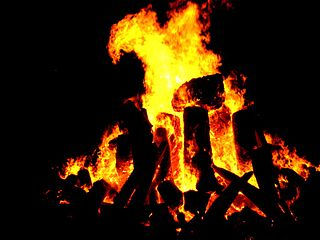
Mongfionn loses her life as a result of her plotting and Nial, not her sons gains the kingship, but Mongfionn is also rewarded for her efforts for her children. Fionn gains revenge without eric or fear of vengeance at the fiacla of Anu. Aonghas gains his true love with the help of his parents and brother, overcoming her father’s reluctance and her own Druideacht. Tlachtga’s death in childbirth not only deifies her but her festival became the start of Samhuinn. Her hill became associated with lighting a druidic fire on the hill which signalled the start of Samhuinn.
“ Firey Hill got its name from a fire being lit on it at a certain time every year. The Hill of Ward, where the ancient palace of Tlachtga stood.”[1]
Her name means ‘earth spear’, which may be a reference to lightning. Her mythos is filled with the number three. Her father is one of three children. She is herself one of three children, with her two brothers. She creates three manafactures with her father and Simon. The three manafactures cause three forms of harm – blindness, deafness and death. She gives birth to three sons from three fathers, who are acclaimed by three shouts at Samhuinn. There are three parts to her story – daughter of Mogh Ruith, making the Roth Ramach and then the Hill of Tlachtga. The hill was surrounded by three ramparts. Three being a sacred number and the multiplicity of it with her myth, unlike any of the other Tuatha may be the reason she was associated with the start of Samhuinn. Her myth also once again shows death coming out of life; victory coming from self-sacrifice.
Most importantly the Second Battle of Magh Tuiread gives the cosmological reason for the festival. The Fomoire represent the forces of decay, entropy, disease, pestilence, and death. The victory of the Tuatha over them maintains our universe.
At the end of the battle the Morrioghan makes a declaration of peace and describes the elements judged to be the normal or even enhanced conditions of life that peace brings while warning of the things that will bring the destruction of life. The victory of the Tuatha symbolising that sith.
[1] Local Place Names, Glennon, Bridie, Ballyfallon, National Schools collection, Page 346, Duchas,
SAMHUINN - PROTECTION OF THE HARVESTS
The Daghda’s harp is revealed as the means by which the Tuatha, and in particular the Daghda, calls the seasons into being. Breas gives the secret of reaping and sowing to Lugh, who acts as the guardian of the harvest. Folklore from county mayo depicts Balor with seven eye-lids. As each one is lifted there is a greater danger of fire.
“He had a single eye in his forehead, a venomous fiery eye. There were always seven coverings over this eye. One by one Balar (sic) would remove the covering. With the first covering the bracken began to wither. With the second, the grass became copper covered, with the third the woods and timber began to heat, with the fourth the trees began to smoke,
with the fifth everything grew red, with the sixth it sparked. With the seventh, they were all set on fire and whole countryside was ablaze”[1]
By killing Balor, Lugh removes the threat to the harvest. The Tuatha are both originators of the growth of the crops and protectors of the produce of the crops. Lugh also acts to maintain and restore Dòigh as he does by destroying Breas. Breas has broken his oath of kingship and Lugh as the Brian who enforces oaths must act against him.
The Daghda brings all the cows of Ireland back from the Fomoire using the calf that Breas himself gave him as compensation for being falsely accused, which shows the Tuatha have the control of the source of milk, meat and wealth. During the course of the battle the Tuatha conjure the stones of the earth and the waters and rivers, which suggests their control over the landscape.
[1] Myth, Legend and Romance: an encyclopedia of the Irish folk tradition, D. O’Hagain, Prentice Hall, 2009
SAMHUINN: DRAOIDHEACHD
Druideacht, drudic art, science or magic abounds everywhere at Samhuinn. The Draoi of the Tuatha conjure the very stones of the earth against the Fomoire; Macha, Morrigan and Neamhainn cast showers of mist, fire and blood.
Diancecht and his children restore the Tuatha’s warriors by chanting over a spring. The Daghda and Lugh plays the Three Strains on the Daghda’s harp affecting both the Tuatha and the Fomoire. Midhir has his eye put out by a holly twig. Eadaoin or Dian Cecht cures Midhir’s eye with the pure waters of Loch Da Rig. Aonghas Òg uses the eolas ‘Luck and Prosperity’ to get the Brugh from Ealcmhair. Fionn defeats Ailen by using an enchanted spear which releases a fume which stops him falling asleep. Trefuilgnid Tre-eochair carries a branch of unripe fruits, from which comes the Five Great Trees of the five provinces of Ireland. According to Fingen’s nightwatch the Five Great Roads come into being at Samhuinn as well as many other ‘wonders’. Boann uses the rivers of Ireland to search for the woman from her son’s aisling. Aonghas Òg turns himself into a swan and both he and Caer sing the Restful Strain over the whole of Ireland for three days, indicating the rest from labour of the festival. Midhir transforms himself and Eadaoin into swans to escape Eochaidh Airem. Tlachtga creates the three manufactures which blind deafen and kill. The Morrioginn turns herself into an eel, a wolf, and a raven in her fight with Cuchulain and tricks him into curing her in the Tain. A draoi in Da Dearga’s hostel conjures Conair into thirst and then conjures the rivers of Ireland to refuse him water.
Divination and prophecy was a key feature as one would expect for a new year’s festival. Rothniamh reveals fifty wonders to Fingen, though only twelve are listed, which will happen due to the birth of Conn Cethchathach, which shows how his birth disturbs the Sionn.
The Morrioginn pronounces both a prophecy of peace and the results it brings and a prophecy of the end of the world at the end of the Second Battle of Magh Tuiread. Aonghas Òg is afflicted with love-sickness after a vision of Caer Ibormaith. whose by-name means ‘love’ or ‘beauty of yew-berry’. Mongfionn’s druid prophesies that it is Nial Noigeallach who will take the kingship.
SAMHUINN: FAMILY & COMMUNITY
Samhuinn is a great social and communal celebration. Family and community was at the heart of the festival. The evidence from the early mediaeval period is that people travelled large distances to attend various feasts. Feasting was an essential part of the social relationships of the ancient Gaels. The giving of a feast was a primary duty of a lord and king as a display of his or her ability to provide for the people. It also demonstrated the grace of the Brianag of the land and the Tuatha in general.[1]
Archaeology and epigraphical research suggests that of the four Great Feasts, assemblies were in general limited to Lughnasadh and Samhuinn. Only one festival site is recorded as being a Bealltuinn assembly and none are recorded as being held at Imbolc. Samhuinn and Lughnasadh are communal festivals while Imbolc and Bealltuinn were familial festivals. [2]
Lugh arrives when the Tuatha were gathered not so much for a feast as for joint meal of misery, but gathered together. The Settling of the Manor of Tara is set at a gathering for the explicit purpose of meeting. Aonghas, Boann, Daghda and Bodhbh Dearg hold a feast for three days before meeting Caer. Mongfionn gives a feast for her brother and his court. Dearmaid MacCearball suffers the Triple Death during a feast. Fionn MacCumhal uses the feast of Samhuinn to get revenge. The Nurture of the The House of the Two Milk Vessels starts with a feast.
Family relations, not an uncommon issue with Christmas and New Year, feature in a number of myths, whether its Aonghas Og taking the Brugh from his father and his relative Ealcmhair; Mongfionn somewhat ambivalent attitude between her brother and parents and her sons; Tlachtga and her sons or Midhir and his stormy family relations between Fuamnach and Eadaoin.
[1] Kingdoms, Communities, and Oenaig: Irish Assemblie Practices in a North-west European Context, Gleeson, P., Journal of the North Atlantic, Special Vol. 8, 2015
[2] Festivals, Deaths and the Sacred Landscape of Ancient Ireland, Journal of Indo-European Studies, No. 31, 2003
SAMHUINN: COMMEMORATION
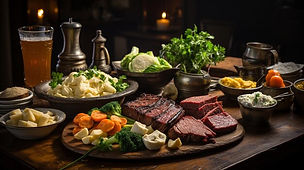
Samhuinn is a seven day festival with three days before the day of Samhuinn and three days after it. As with any major festival it starts with an offering to the Good folk, to ensure a peaceful event and to wish them to have a good Samhuinn. Manannan is invoked as ‘lord of every wedding and feast’. The three days before Samhuinn are concerned with protection, purification and saining. One aspect is to look back at the year and ourselves and see what we want to change and characteristics we would like to encourage, which is where new years resolutions came from.
The Day of Samhuinn features the the myth of Tlachtga and Second Battle of Magh Tuiread.
The Cailleach begins her reign as Queen of winter so both her and Brighid are honoured. The Daghda and the Morriginn are honoured for their meet and mating.
“To unite on such a day would be a symbolic renewal of the vitality of the tribe, “represented by the chief and the river-goddess who fertilises it.” Here, the Dagda’s union with the Morrigan, or even Boann, projects on a mythological plane the ritual union of the king with the earth in a form of marriage that ensures the prosperity of the tribe and their territory as a whole. In terms of Cath Maige Tuired the Dagda’s hierogamical rite here ensures not only the Morrígan’s help through his union with her, but by his very actions ensures the prosperity of his tribe in the coming year. To draw a comparison with Bres again, it could be said that the Dagda, although not a king in this tale, understands more fully the qualities of a king and protector of a tribe than Bres ever will – a fact which is illustrated time and again and leads to Bres’s ultimate downfall. While the Dagda is more than willing and able to give for his tribe and fulfil his obligations, Bres is more interested in acting for his own gains.
What we have here, as Sjoestedt puts it, is “mythico-ritual complex which belongs to the most ancient deposit that Irish tradition has preserved.”[1]
Lugh is honoured as the Deliverer who frees the Tuatha from the tyranny of the Fomoire and as guardian of the harvests. Manannan is honoured as he who assigns the anam to the Sith and Donn is honoured for his hospitality. Brighid is honoured for sending out her greyhounds and Boann is honoured as mistress of the Bothar Bo Fionn. Mongfionn is honoured for her ambition and actions for her children.
The eve of Samhuinn is the time when the gates of the Eastern Lios are opened and the Brianna and the Sitheachan and the Aos sith can roam freely in our world. People stay indoors after dark. A ‘dumb supper’ is given as an offering the Blessed Dead. It’s a time to remember our loved ones who have passed. The hearth fire of the shrine is discarded, a new one built and sained, symbolising the hope of the new year.
The night of Samhuinn is a time for divination and the morning of Samhuinn is the time of the Frith, which is a form of divination which involves looking out from your doorstep and determining your future from what you see. The house is swept symbolising driving out bad luck an bringing in good luck.
The morning after Samhuinn is a time for thanksgiving for all the harvests and safely coming through the night before. The days after Samhuinn are about the blessings for the forthcoming year. Manannan is honoured as the lord of the ocean and asked for his blessings of fish and seaware. Before Samhuinn he is honoured as the lord of the cosmic ocean, after of the earthly ocean. Blessings are asked on the sick and those who will pass beyond in the coming year. The final day commemorates Aonghas Òg coming into the Brugh. The ever-young taking the place of the Daghda symbolising both continuity and change. It also symbolises the continuation of life.
Though Samhuinn is about death, it is a festival of hope and joy because it commemorates the Blessed Dead who live in the sith of the Otherworld and it celebrates life coming out of death and destruction, symbolised by the Tuatha’s victory over the Fomoire and by the Sons of Tlachtga guaranteeing the safety of the people and the land, and Aonghas Òg coming into the Brugh.
[1] Tairis Website, Seren