

LATHA MANANNAN - DAY OF MANANNAN or
FÈIS CURRAIN - FEAST OF CARROTS -
THE AUTUMN EQUINOX


CONDITIONS OF THE FESTIVAL
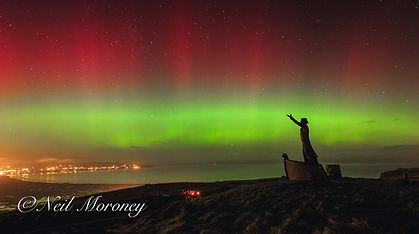
The last of the Great and Solar festivals of the year is the Autumn Equinox. Nights are drawing in and becoming noticeably shorter. Leaves change colour from green to yellows, reds and browns and begin to fall from the tress. The weather turns colder, though there are ‘indian summers’ which bring a brief unexpected period of summer warmth back every few years. It is also the season for ‘mellow mists’.
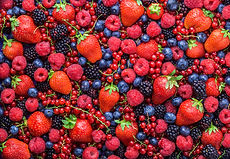
Agriculturally, it’s the time of the last cereal crop harvests and the time to forage fruits such as berries and nuts. Blackberries, bilberries, elderberries, and rowan-berries, hazelnuts, horse-chestnuts all ripen by the equinox. The equinox was the last time to collect them. According to tradition 'the devil spits on them' after the equinox making them inedible, though in Ireland and Scotland it was the Aos Sìth who did the spitting. The extra moisture in the air can cause fungus to grow on berries making them poisoinous.
Rose Hips from Dog Roses can be used to make tea. Mushrooms can appear as ‘Fairy Rings’. Root crops such as carrots, turnips, parsnips were harvested for the equinox. Lambs born in May are still being weened but it is also the time to prepare gimmers, female sheep who have given birth to two sets of lambs to be readied for sale or slaughter. As crops have been harvested, its is also a time to plough the soil in preparation for sowing barley and some wheat varieties.
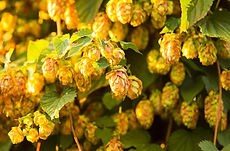
Hops ripen in august and September, which may, with the barley harvest in late July, be the reason why it’s a season for brewing beer and ale.
Some birds begin their winter migrations in September such as chiff-chaffs, terns and seabirds. geese and swans migrate into the British Isles starting around the equinox. Foxes are busy getting their winter coats on and fighting for mates and territory. Most animals are busy laying down stores for or preparing for winter. Some deer particularly in the south of Britain may begin the rut. In terms of myth like the other non-samhuinn festivals there are few that are specifically named as occurring at the equinox.



THE HURLING MATCH

Hurling, and the Scottish form of Shinty, has been played since the early Mediaeval period and probably for further back. Midhir loses an eye breaking up a hurling match to protect Aengus/Aonghas Òg in the Wooing of Etain. The fir bolg and the tuatha play a hurling match on the eve of the First Battle of Magh Tuiread Cunga. Cuchulainn takes up arms on the day when conchonbar is watching a Hurling Match. He uses a hurling ball to kill Culann's hound getting his name.
In the area of Lough Gur, CnocÁine and CnocFirinn there is a myth that the Sidh of Áine and the Sidh of Donn play a hurling match at the Autumn Equinox. The goddess of growth versus the Lord of the Dead. The winner takes the root crop harvest. If Áine's sidh wins, the harvest is plentiful. If Donn wins the harvest is poor.
In then Fenian cycle Donn is the son of Midhir, so sister to Grian/Macha and the father of Eogabail, Áine's father.
According to the Marauding of Donn's Green, [1]the tuatha attack Donn and his 28 brothers three times a year. It is possible this reflects a myth explaining the success or failure of the harvests. The three times a year may refer to Lughnasadh, the cereal crop harvest; the autumn Equinox, the root crop harvest and Samhuinn, the harvest of flesh and apples.
[1] Colloquy of the ancients, O' Grady, S.H., In Parentheses Publications, 1999, Cambridge, Ontario, Canada


OENACH MACHA - FEAST OF MACHA

© Shelley LaBrande
One myth which may be applicable at this time is The Debility of the Men of Ulster. The tale involves the Brianag, goddess, Macha who takes pity on a widowed farmer called Cruinnchiu, or Cruinn. After the death of his wife, Cruinnchiu's farem had been failing and he was poverty-stricken. Macha appears takes control of the homestead and farm and runs both perfectly. As a result Cruinnchiu’s fortunes dramatically improve and the farm is fertile and prosperous.
Macha places a requirement or Geis on Cruinnchiu never to speak of their liaison to anyone. Unfortunately, when Cruinnchiu attends a horse race festival given by King Conchobar, he declares his wife could out-run the kings horses in the hearing of the king.
Macha, even though she is heavily pregnant, is forced to race against the king’s horses or Cruinnchiu will be executed. Macha runs the race, beats the king’s horses but dies in the process. As she is dying, she curses the men of Ulster that they will suffer the pangs of childbirth for five days and four nights when faced with their enemies.[1]
One of the purposes of the myth is to explain how Cuchulain has to face Medhbh and Aillil’s armies virtually single-handed. Macha’s curse does not apply to women, children or foreigners, only men. So as a result, Cuchulain alone can defend Ulster at the Tain Bo Cuailgne as he took up arms before time and he was counted as a foreigner as his father was Lugh.

Horse-racing was a feature of both Lughnasadh, as Lugh is supposed to have invented it and at the Equinox in Scotland, where it was dedicated to Manannan at the Autumn Equinox called the Oda.


Either of these two festivals could have been the background for the myth. However, the Autumn Equinox is more likely as it fits better with the mythos of Macha and the time-span of other myths.
The main mound at emain Macha is orientated due west, the place of the setting sun while the 'figure of 8' temples or shrines are orientated due east which would mean the sun would shine directly into the entrances at the equinoxes.
Macha is associated with horses which are solar images as their gestation period is roughly a solar year. Macha gives birth to twins, a son and a daughter, ‘fir’ – ‘true’ and ‘Fial’ – ‘generous’. She also gave Cuchulain two horses one of which is called Liath Macha , Grey of Macha.
This is again solar imagery representing both the two equinoxes, dawn and dusk, the two solstices and the two halves of the year. Macha’s mast crop was a kenning for the severed heads of those conquered in battle. It is possible that the association of mast with her comes from her connection to autumn, when nuts become ripe.
When asked to name herself she states she is the daughter of Sainreth Mac Imbaith or Strange (Specific characteristic), son of the Sea. In the Dindshenchas, it states she was ‘summoned from the sea’ or ‘came from the waves', which would suggest sunset. Ard-Macha is described as being ‘rich in mead’, a drink with solar connotations, sometimes referred to as ‘liquid sunshine’.
However, in the Dindshenchas her father is given as Midhir and she is called' Grian in the west' , the ‘pale sun of winter’ and the sister of Àine.[2] Indeed, the Dindshenchas applies the epithet ‘Sun of Womankind’ to both, which again suggests the pre-eminence of solar imagery which would connect the Debility to the Equinox.
As indicated, the tale serves as a remscela or pre-tale of the Tain Bo Cuailgne which begins at Samhuinn. Although, that in itself does not preclude it happening at one Samhuinn and the Tain occurring at a subsequent one, it would be unlikely. The Debility must precede the Tain.
Therefore, the only two festivals it could mark are Lughnasadh and the Autumn Equinox. Eamon Kelly argues that the Oenach Machai, founded in her honour was a harvest festival held at the autumn equinox. He argues the alignment of the ‘fire-houses’ at Emain Macha, her conflation with Grian, her connection to pairs of horses and the find of the Dunaverny Flesh-Hook with two crows facing five water-birds, probably geese, would indicate her connection to the autumn. Morgan Daimler on the otherhand believes the Oenach Machai was held at the same time as Lughnasadh.[3] Macha is the tutelary goddess of Ulster, Ireland's most northly coige or province. The sun crosses the celestial equator moving south-ward at the Autumn Equinox.
[1] Cuchulain of Muirthemne, Gregory, Lady A., John Murray, 1902
[2] Metrical dindshenchas, Gwynn. E., Todd Lecture Series, Folklore 4 & Revue Celtique 16
[3] Macha Sovreignty and Horses, Daimler, m., The Grey Mare on The Hill, ed. Davies, Lee, Grey Mare Books, 2015,
THE SLAYING OF THE MATA
There is another myth which may apply at this time of year from the Dinnshendchas. This is the mysterious episode of the killing of the Mata.
“4. DINDGNAI IN BROGA.
Of the remarkable things of the Brug, this:
The House (Bed?) of Forann’s daughter.
The Monument of the Dagda. The Rampart of the Morrígain.
The monument of the Máta: from its colptha (shinbone) Inber Colphtha
called.
The Palace of Crimthann Nia Náir, for he was buried
therein.
The Tomb of Fedlimid the Lawgiver. The Cairn
of Conn of the Hundred Battles. The Grave of Cairbre Lifechar.
The Cooking-place of Fiacha Sraibtine, etc.
The story of the Brug still:
The Bed of the Dagda in the first place.
Thereafter the Two Paps of the Morrígain.
The place wherein Cermait of the Honey-mouth,
son of the Dagda, was born.
The Tomb of Boind wife of Nechtán son of Nuada.
’Tis she that brought with her the little hound named Dabilla,
whence ‘Dabilla’s Hill’ is so called.
The Mound of Tresc. The Tomb of Esclam
the Dagda’s brehon, which is today called Ferta Patraic.
The Comb and Casket of the Dagda’s wife, i.e. two hills. The tomb of Aed Luirgnech the Dagda’s son.
The Cave of Bualc the Little.
The Monument of Cellach son of Mael-coba.
The Monument of the steed of Cinaed son of lrgalach.
The Prison of Liath Machae.
The Glen of the Máta, that was a tortoise,
as some say. The Stone of Buide son of Muirid,
the place where his head is.
The stone of Benn (?), that is, the monument
on which the Mata fell: seven score feet had he and
seven heads. The Mound of the Bones (of the Mata).
The Stone-wall of Oengus son of Crundmael. The Shot of Mider’s
Eye, etc.”[1]
METRICAL DINDSHENCHAS
“The Grave of the Mata after his slaying,
Is plain to see on thee, O Brug, studied with horses;
The sea has rioted his bone,
Whence pleasant Inber Colpha is named.”[2]
know you the refuse of heads,
The glen where the Mata dwelt,
It was slain after the incursion of the lithe hosts,
Much havoc was wrought there.
Thereafter came a (deed without concealment).
The kings from a pleasant land on account of him,
To view the vast Mata,
And each planted on him pitilessly his stone.
Buide planted his keen stone,
In the portion called Finn’s seat;”
“In the presence of the hosts of the glens he left,
His head on the plains of Muiread Mend.
Thereafter came the Mighty Ulstermnen.”
“(conn’s proper share) against him,
To strive with the might of the sluggish Mata,
So his limbs were broken on Lecc Bend.
A solid barrow was built by them
For a rampart over the bones of the beast;
That was the trophy, a fight with lamentation,
Which it possessed with victory and might.”[3]
…long since had the seer foretold
the beast that was on Lecc Benn.
The beast that was on Lecc Benn
had seven score feet, four heads;
its shank and its toe reached to here,”
it licked up the Boyne till it became a valley.
… the strange beast, it found rest:
it was slain on Brug maic ind Óc”[4]
[1] Dindgnai in Broga, Prose Tales in the Rennes dinnshenchas, Stokes, W., Revue Celtique, Vol. 15, 1894
[2] Brug na Boine I, Poems from the dindshenchas, Gwynn, E., Royal Irish Academy, Hodges, Figgis & Co., 1900
[3] Brug na Boine II, Poems from the dindshenchas, Gwynn, E., Royal Irish Academy, Hodges, Figgis & Co., 1900
[4] Metrical dindshenchas, Vol III, Gwynn, E. Royal Irish Academy Todd Lecture Series Volume X, Hodges, Figgis & Co. Ltd.
The mound of an Daghda

© Anthony Murphy MyhticalIreland.com
Paps of the Morrigin


The Mata is variously described as being a tortoise, a sea-turtle or having four, seven or more heads and up to 140 legs. Its limbs are thrown into the Boyne to fill it up and its shinbone is thrown as far as Inbhir colptha, Estuary of the Shin-bone, hence the name.
“When the men of Erin broke the limbs of the Matae, the monster that was slain on the Liacc Benn in the Brug maic ind Óc,
they threw it limb by limb into the Boyne, and its shinbone (colptha) got to Inber Colptha (the estuary of the Boyne), whence Inber Colptha is said, and the hurdle of its frame (i.e. its breast) went along the sea coasting Ireland till it reached yon ford (áth); whence Áth Cliath is said.”[5]
The story is reminiscent of an episode in the Rg Veda where Indra kills Vritra, son of the Asvaras Danu and Bial, who has drank all the waters of heaven and earth. Indra kills him and cuts his belly open so giving the earth rain and monsoons. This may also be represented in the Jupiter-Giganten-Sauele of Germany which consisted of a bearded god on a horse or chariot trampling either a snake or a multi-limbed monster.[6]
The filling of rivers tends to happen in the spring with the onset of the spring thaw or from the Autumn Equinox. Historically the period, most prevalent for flooding was from the end of September until the endImbolc may lie at one end of this period while the Autumn Equinox marks the start of it. No time frame is given in the episode but the Autumn Equinox is the most likely as it refers to flooding. Whereas the episode with the Daghda and the Darkness of the Ocean involves removing flooding from the land, this episode involves filling the rivers.
[1] Dindgnai in Broga, Prose Tales in the Rennes dinnshenchas, Stokes, W., Revue Celtique, Vol. 15, 1894
[2] Brug na Boine I, Poems from the dindshenchas, Gwynn, E., Royal Irish Academy, Hodges, Figgis & Co., 1900
[3] Brug na Boine II, Poems from the dindshenchas, Gwynn, E., Royal Irish Academy, Hodges, Figgis & Co., 1900
[4] Metrical dindshenchas, Vol III, Gwynn, E. Royal Irish Academy Todd Lecture Series Volume X, Hodges, Figgis & Co. Ltd.
[5]The Prose Tales in the Rennes Dindshenchas, Stokes, w., Revue Celtique 15, 1894
[6] Jupitergigantensauele, Brauchenss, G., Stuttgart, 1976
THE CAILLEACH
One common tradition in Ireland, Scotland and the Isle of Man is the Harvest Cailleach. The first farmer to finish harvesting the wheat crop would make a corn dolly from the last sheaf of corn. He would then pass it on to a neighbour who hadn't finished until it was given to the last farmer to finish harvesting.
He was then required to 'maintain' the Cailleach over winter, which was considered an arduous task. In pagan times this would have probably involved offering butter and milk at regular intervals.
The Carmina Gadelica records that those attempting to pass on the icon were subject to certain degree of rough treatment if they were caught. This included having their heads shaved in a "fool's tonsure".[1] This appears to be the same as the tonsure given to druidic initiates. The head was shaved forward of a line drawn from ear to ear. The Greek author Arrian wrote about it in Cynegetica in the Second Century B.C.E.[2]
[1] Carmina Gadelica, Carmichael, A., Floris Books, 1910, Glasgow
[2] Caesar's Druids, Aldhouse-Green, M. Yale University Press, 2010, Massachusetts, USA

Although many pagans think of the Cailleach as the Queen of Winter, her appearance in Irish myth and Scottish folklore is far more extensive. One story from Ireland explains why she is linked to the harvest. In the 'Cailleach and Beartas MacManais' she is 'the greatest reaper who cannot be outrun'. She has the strength of fifty and no-one can match her speed with the scythe. In the Dindshenchas of Cnogba, Knowth she is Buaidh or Bua the wife of Lugh Lamhfhada. She is also one of the wives of Manannan.
The fields were ploughed after the Autumn Equinox and in January in preparation for planting. The Cailleach effigy was tied to the plough team in order to bring good luck. Perhaps the Cailleach's blessings was a reward for the farmer 'maintaining' her during the winter months.
Her monuments in Ireland Cnogba, Knowth, the Cairns on Sliabh na Caillig and the Cliffs of moher face due east or due west, which is the direction of the rising and setting sun at the equinoxes.
ST. MICHAEL - THE NEPTUNE OF THE GAELS
Alexander Carmichael gives a vivid description of the festivities of St. Michael's Day in the Highlands and Islands of Scotland. St. Michael he declares was the 'Neptune of the Gael' which can only be areference to the euhemerisation of Manannan, Righ na Mara, King of the Sea. St. Michael's Day is normally September 29th a week after the Autumn Equinox. Each of the solar festivals have been euhemerised by the Catholic church. The Spring Equinox as Lady Day or the Annunciation; Summer solstice as St. John's Day; Autumn Equinox as St. Michael's Day and Winter solstice as Christmas.
St. Michael takes the souls of the pious to heaven in Christian eschatology. Manannan is the King of the Otherworld who clothes the Blessed Dead in a new immaculate body. St. Michael is the destroyer of demons while Manannan crafts the Crane-bag which is used by Lugh to combat the Fomoire and Fionn MacCumhal to combat the Lochlannaich, Norsemen. St. Michael is the epitome of Christian justice while Manannan punishes Fuamnach for her persecution of Eadaoin; punishes Fer Fhi for accidentally drowning Tuag and Be chuma for her adultery against his own son Gaiar or Gaidhiar among other events. In the 'Coming of Lugh' it is Manannnan who gives him the Claidheamh Soluis, Sword of Light symbolic of justice. St. Michael rides a snow-white charger while Manannan's own horse Brianag, Goddess can ride as easily on the waves as on sea and is white as the foam of the sea.
Of all the saints Only St. Michael is described as 'Brian', the old word for a god. His horse is named as Brianag, goddess. 'Brìgh' meaning life-force and 'an' being the possessive indicator.
FÈIS CURRAIN - FEAST OF CARROTS


One of the most prominent features of St. Michael's Day celebration was carrots. In earlier times carrots and honey were the only form of sweetness available. As well as a welcome source of sweetness, the shape of carrots implied a certain suggestiveness. Basically, they are phallic. A week before the celebrations somer young men were detailed to guard the crops and livestock, others would perform a deiseilof the parish or townland.
A few days before the festival girls would gather carrots (Daucus Carota), another form of carrot resembling a parsnip called Daucus Maritimus and hemlock, which resembles carrots. The Sunday before St. Michael’s Day was known as ‘Domhnaich Curran’ – ‘Carrot Sunday’. The harvesting involved digging three sided holes using a three-pronged digging fork while chanting a rune. The carrots were gathered in bunches called ‘Glac’ or ‘handfuls’ and buried near the house.
The day ended with a ‘ball’ or ceilidh. If the main piper was married all the rest of the men would contribute to his pay for the night. If he was single he would accept nothing. Each woman would place her carrots into a white linen bag. During the course of the ‘ball’ the women would give the men bunches of carrots. As their bags empty they replenished them from the ‘Falachain’ or secret store. Every time they did so they would have to declare it as they entered the dance-hall.

For men, the eve of St. Michael's Day involved guarding the horses. St. michael's day was the one day of the year horses could be stolen without resort to law, as long as the horses were returned in a fit and healthy condition. Even if they were injured no recompense would be sort. The eve was known as 'Glasadh na Feill Mìcheil', 'Locking of the Festival of St. Michael'. Glasadh is also the term used for the final stage of dawn, when the sun is 'locked' in the sky.


For women the eve was spent making an struan, the autumn Equinox/St. Michael's Day bannock. You can find a recipe on the Recipes Page.
Of all the bannocks made during the year, the Struan by far was the most complicated. It had to include a ‘peck’ of all the cereals grown on the farm.
The grains are fanned on the floor; ground in the quern and then used in equal measure. The men would bring a large flat stone from the moorland to use to cook the Struan and had to be covered in a sheepskin.
The fire had to be made from the eight sacred woods. As it baked it was laveered with sheep’s milk applied with three tail feathers of the year’s cockerel. After the equinox ewes were allowed to roam the hills rather than being kept to provide milk. Large Struans were made for the family and community or small ones would be made for each family member.
An absent or a member of the family who had died in the year also had their own individual bannocks shared between those present. As the smaller ones were made a rune would be recited over it including the name of the person to whom it was given. Any left-over grain was put in a sock and dusted over the livestock the following day to bless them.
The making and serving the bannocks was surrounded by various admonitions and warnings against mistakes or errors which would bring bad luck for the following year. You can finhd a recipe for an Struan here
On St. Michael’s Day morning the struans would be blessed and placed on a board ‘As white as the chalk of the rock or the snow of the hill’. Once cut up the family would raise the ‘Iolach Micheil’ or ‘triumphal song of Michael’ before eating. The family would take a piece of Struan in the right hand and a piece of the sacrificed lamb in the left before singing.
Each family who could afford to do so would kill and cook a lamb. Alexander Carmichael says that the lamb was formerly sacrificed but is now eaten, just like Bealltuinn.[1] Daneher also says that families would kill a lamb in Ireland but that the custom died out and the lamb was replaced with a goose.[2] At Bealltuinn the lamb was sacrificed as a thanksgiving offering for a successful Imbolc. At the equinox it was given in hope of a successful Imbolc to come. The equinox is five months from Imbolc, which is the gestation period for sheep.


After the consumption of the Struan, the family would dress in their finest and head out to give alms to the poor.
“it is proper that every husbandman in the townland should give a peck of meal, a quarter of Struan, a quarter of lamb, a quarter of cheese, and a
platter of butter to the poor and forlorn, to the despised and dejected, to the alms-deserving poor, and to the orphans without pith, without power.”[1]
In return for the gifts, the giver would receive the blessings of the recipients and the approval of the community. There is no reason in Christian mythology for alms giving in association withSt. Michael. it may be this was a remnant of ancient custom or it could be because St. Michael is often described as 'nam Buadh', 'of the victories'. Buadh in Gaelic means 'gift, endowment or pre-requisite' as well as victory. it may also be because Manannan's Corrbolg, 'Crane-bag' contains eight gifts or treasures and Manannan was associated with the provision of fish and sea-ware.
One of his epithets is 'man of promise, man of fulfillment'. the traditional prayer contained the phrase 'Progeny and prosperity of family, Progeny and plenty of herd'. Giving alms may have been reciprocation for the blessing.


Bone comb by CreativeAnachronism, Etsy

Eriks Knitting shop, Etsy
The ceilidh at the end of the day also involved gift giving. Men would get new clothes from women. While the women would be given brooches, combs, mirrors scissors, knives and snoods or cowls.
After distributing the alms in the morning, the entire community would mount their horses, including the stolen ones, and proceed to St. Michael's burial ground in their 'sunday best'. Carmichael describes it as a cavalcade of colour and joyous noise with shouts and greetings and the horses whinnying and neighing and being restive. Once they reach the burial ground, prayers are offered for the year ahead and then they deiseal around the burial ground three times.
Once the deiseal is complete the community would then repair to the Oda – a set of horse and human races, normally held on the beach or the machair. Any profits from betting had to be spent by the end of the Ceilidh or bad luck would ensue.


The day ended with a ‘ball’ or ceilidh. If the main piper was married all the rest of the men would contribute to his pay for the night. If he was single he would accept nothing.
A number of dances had symbolic meanings including one called ‘Cailleach an Dudain’ or ‘Cailleach of the Mill-dust’, where a man and a woman would dance around each other while the man held a ‘druidic wand’ above their heads.
The man then touches the woman who feigns death. The man then proceeds to breathe on each limb in turn and touches them with the ‘druidic wand’ which the woman jiggles, suggesting they had been reanimated. At last, the man breathes into the woman’s mouth and touches the woman’s heart at which point she leaps to her feet and dances as before. It appears to be a kind of recreation of the process which Brighid uses to bring life back to the earth and instills life in new babies, which again connects it to Imbolc, only this time it may be that the man represents Manannan. It is also reminiscent of the myth of ‘How the Daghda got his Magic Staff’ as he first kills the three brothers and then brings them back to life.
GAELIC
MODERN ENGLISH
Cailleach an dudain,
Cailleach an dudain,
Cailleach an dudain,
Cum do dheireadh rium!
Cailleach an dudain,
Cailleach an dudain,
Cum do chul rium,
Cum do cheathramh rium!
Cailleach an dudain,
Cailleach an dudain,
Null e ! nall e!
Cum do cheathramh rium!
Cailleach an dudain,
Cailleach an dudain,
Sios e! suas e!
Nuas na beirearan(?)!
Cum do chul rium!
Cum du cheathramh rium!
Old Woman of the Oats
Old Woman of the Oats
Old Woman of the Oats
Keep your last to me!
Old Woman of the Oats
Old Woman of the Oats
Keep your support to me
keep your bushel to me!
Old Woman of the Oats
Old Woman of the Oats
there with it! here with it!
Keep your bushel to me!
Old Woman of the Oats
Old Woman of the Oats
Down with it! Up with it!
Not taken down!
Keep your support to me!
Keep your Bushel to me!
1950'S TRANSLATION
Old Woman of the mill dust,
Old Woman of the mill dust,
Old Woman of the mill dust,
Keep thy rear to me!
Old Woman of the mill dust,
Old Woman of the mill dust,
Keep thy back to me,
Keep thy quarter to me!
Old Woman of the mill dust,
Old Woman of the mill dust,
Over with it! Back with it!
Keep thy quarter to me!
Old Woman of the mill dust,
Old Woman of the mill dust,
down with it! Up with it!
let it not be brought down!
Keep thy back to me!
Keep thy quarter to me!
Picture & Words from The Dannsa Na Cailleach – Dance of the Old Woman ‣
[1] Carmina Gadelica, Carmichael, A., Floris books, 1910, Glasgow
[2] A Year In Ireland, Daneher, K., Mercier Press, 1972, Cork, Ireland
MATHAIR NA MARA
In the Orkneys, the equinox marked the time when Mathair Mhara,
The Mother of the Sea, retires due to exhaustion and the monster Teren breaks his chains, rises up from the ocean floor and brings winter sea storms.[1] It is one of the three times of the year offerings were made to ‘Seoinidh’, the Ancient One, who is a form of Manannan. The other days being Samhuinn and the Winter Solstice.
[1] Orkney Folklore, Sea Myths, The Scottish Antiquary, Vol. 5, 1891, JSTOR, 25516359
